








A Comparative Guide to Stainless Steel Standards: European vs. American
- Views:0
- Author:
- Publish Time:2026-11-20
- Origin:
Stainless steel quality is governed by two major standards—European (EN) and American (ASTM). Understanding their differences helps in selecting the right material for your projects.
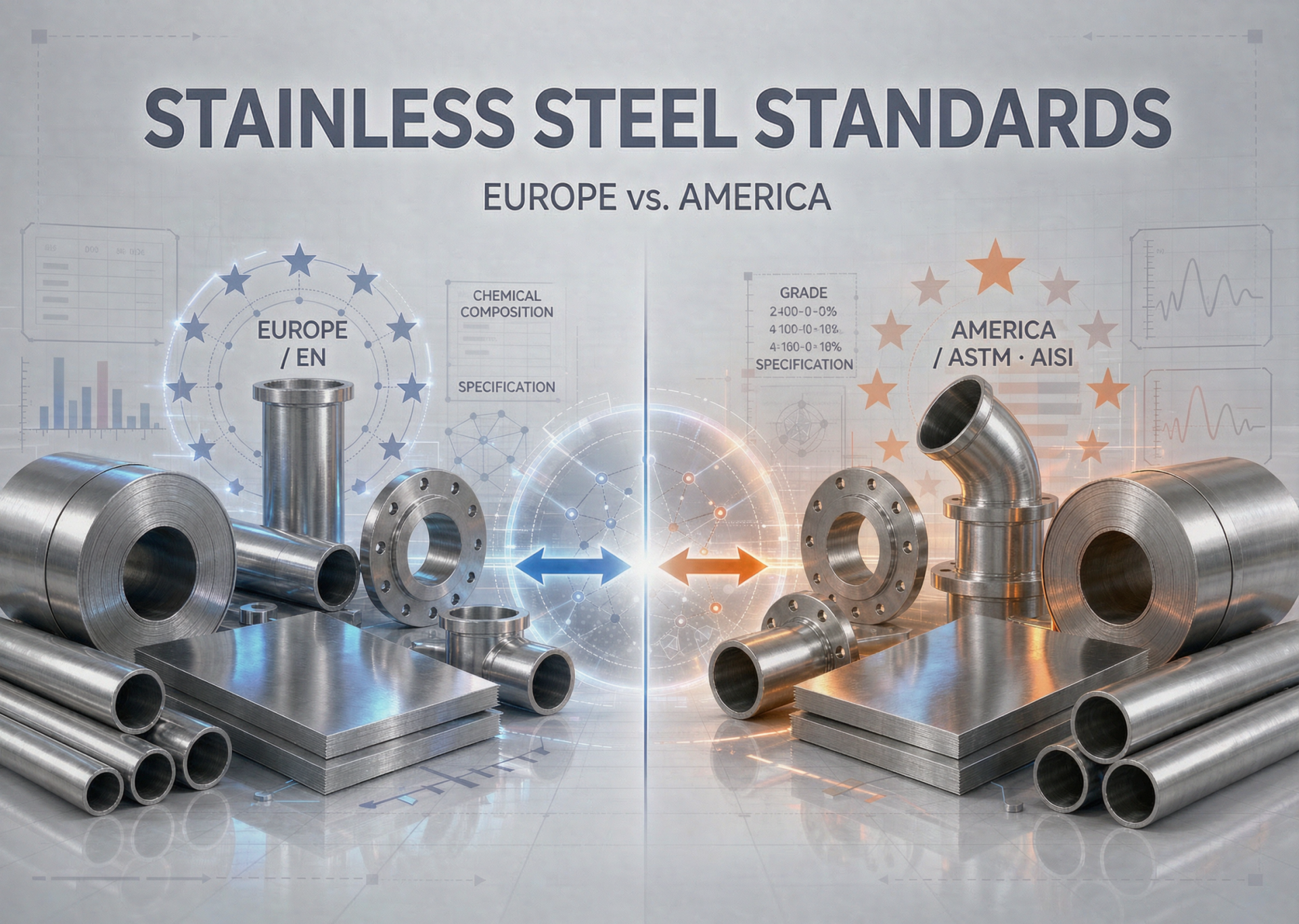
European Standards (EN):
The EN framework, developed by the European Standardization Committee, emphasizes chemical composition and mechanical properties. Key standards include EN 10088-1 (general technical delivery conditions), EN 10088-2 (chemical composition), and EN 10088-3 (mechanical properties). These ensure products meet rigorous European market demands.
American Standards (ASTM):
ASTM standards, set by the American Society for Testing and Materials, focus on physical properties and manufacturing characteristics. Notable standards include ASTM A240 (plates, strips, and rings) and ASTM A276 (bars and hot-workable alloys), ensuring reliability and adaptability in production.
Key Differences:
Units: European standards use metric units; American standards use imperial units.
Parameters: EN assesses impact strength and elongation for stable performance under stress, while ASTM emphasizes hardness and tensile strength for reliability across temperatures and environments.
Making the Right Choice:
For European markets, EN standards are advisable; for U.S. markets, ASTM standards are more beneficial. In some cases, integrating both standards ensures comprehensive quality and performance.
Conclusion:
European standards prioritize chemical composition and mechanical properties, while American standards focus on physical properties and processing characteristics. Selecting the appropriate standard based on your needs and market positioning ensures the required quality and performance.
For more information, please visit our website: www.hcadto.com or contact us via email at www.hcadto.com.


