








The Crucial Role of Stainless Steel Round Bars in Modern Engineering
- Views:0
- Author:
- Publish Time:2026-08-27
- Origin:
In precision engineering and heavy manufacturing, material selection dictates structural safety, component lifespan, and mechanical efficiency. Stainless steel round bars serve as an essential foundation for critical load-bearing parts, precision shafts, and high-stress industrial machinery operating across demanding global environments.
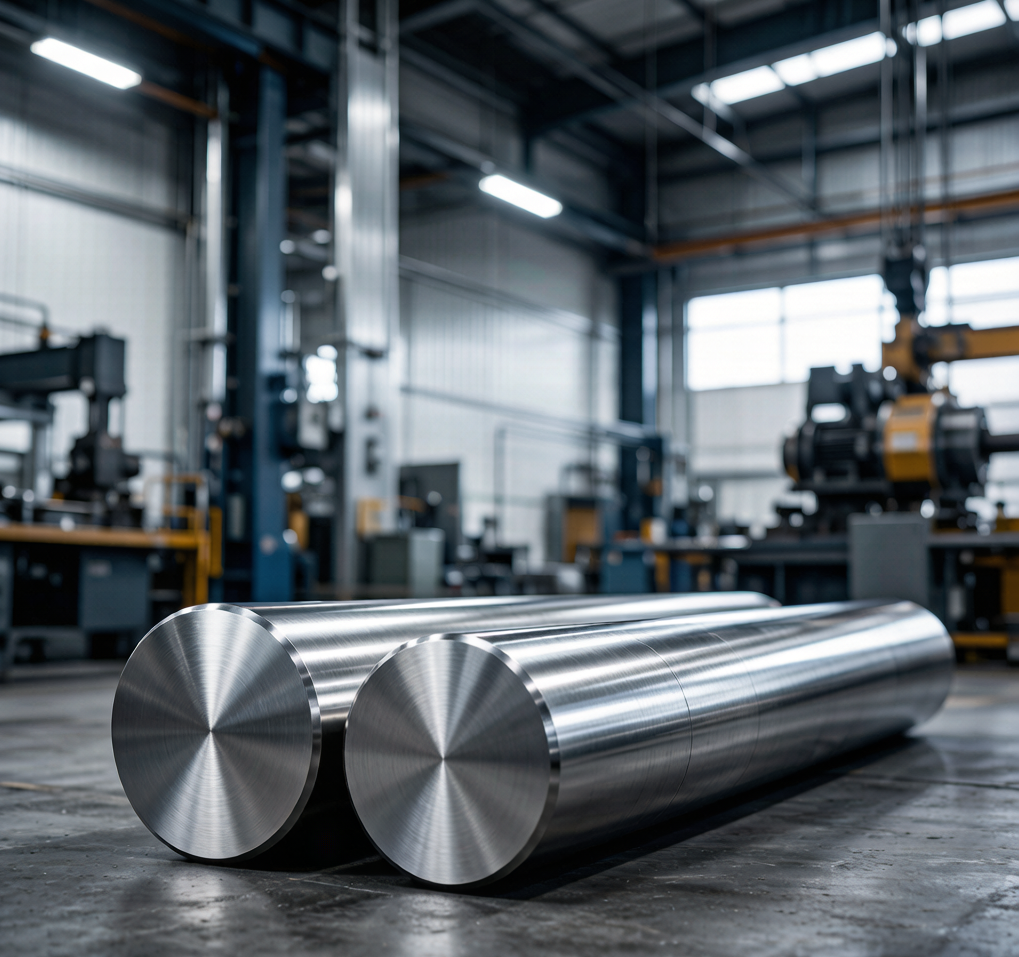
Key Engineering Advantages of Stainless Steel Round Bars
High Tensile Strength & Mechanical Load Capacity: Engineered for extreme stress, stainless steel round bars—particularly precipitation-hardened grades like 17-4 PH and cold-finished 316—deliver yield strengths ranging from 500 to over 1,000 MPa. This high strength-to-weight ratio makes them indispensable for heavy-duty drive axles, turbine shafts, and aircraft landing gear pins that must endure continuous torque and intense shock loads without deformation.
Unrivaled Corrosion Resistance in Harsh Media: Containing a minimum of 10.5% to over 18% chromium, stainless steel forms an imperceptible, self-healing passive oxide layer that shields the core metal from rust and chemical attack. In offshore marine environments and chemical processing plants, grade 316L round stock naturally resists pitting and crevice corrosion from chloride exposure, cutting long-term equipment maintenance costs by up to 35% compared to carbon steel alternatives.
Tight Machine Tolerances & High-Speed CNC Machining: Modern manufacturing relies on centerless ground and cold-drawn stainless steel bars manufactured to strict ISO tolerances (such as h7, h8, and h9). Their exceptional dimensional uniformity and consistent grain structure make them ideal for high-speed CNC Swiss lathe turning, producing smooth surface finishes for motor spindles, hydraulic piston rods, and high-precision valve stems with minimal tool wear.
Broad Industrial Application Spectrum: Thanks to their versatility, stainless steel round bars are integrated into vital components across diverse sectors. In the automotive industry, they are forged into robust steering knuckles and drive shafts; in aerospace, lightweight high-alloy bars form structural actuation linkages; and in marine architecture, heavy-diameter bars are used as high-strength tie rods for tensioned suspension bridges and port infrastructure.
Lifetime Cost Efficiency & Circular Sustainability: While raw material costs for stainless steel are higher than standard carbon metals, an operational lifespan easily exceeding 30 to 50 years with virtually zero repainting or chemical treatment yields a significantly lower total cost of ownership (TCO). Furthermore, stainless steel is 100% recyclable, with recycled scrap retaining full mechanical integrity when remelted, helping engineering firms meet strict environmental and circular economy targets.
Upgrade Your Engineering Specifications Today
Incorporating premium-grade stainless steel round bars into your design and manufacturing workflow ensures superior component reliability, tight mechanical performance, and long-term operating efficiency.
Contact our technical engineering team today to request material test reports (MTRs), custom cut-to-length options, and a competitive quote for your next manufacturing run.


