








Role of Various Elements in Nickel-Based Alloys
- Views:0
- Author:
- Publish Time:2025-12-09
- Origin:
Definition: Nickel-based alloys refer to a class of alloys that exhibit high strength and certain oxidation-corrosion resistance at temperatures between 650°C and 1000°C. They are further categorized based on primary performance characteristics into nickel-based heat-resistant alloys, corrosion-resistant alloys, wear-resistant alloys, precision alloys, and shape-memory alloys. High-temperature alloys are classified by their matrix into iron-based, nickel-based, and cobalt-based types, with nickel-based alloys being the most prominent.
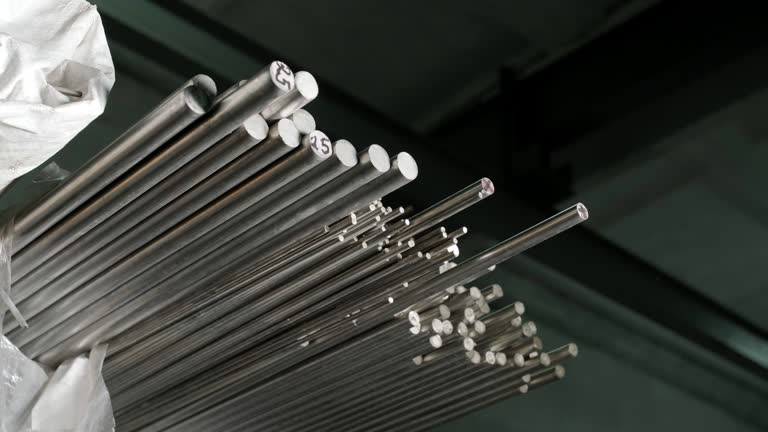
Nickel-based alloys are indispensable in numerous fields where standard stainless steels like 304 fail, including:
Marine: Offshore structures, desalination, aquaculture, and seawater heat exchangers.
Environmental: Flue gas desulfurization in thermal power plants and wastewater treatment.
Energy: Nuclear power, coal utilization, and tidal energy generation.
Petrochemical: Refining and chemical processing equipment.
Food: Salt production and soy sauce brewing.
With industrial advancements, demand for high-performance nickel-based alloys has surged. China's market size reached ¥23.07 billion in 2011, growing at 19.47% annually.
Application Requirements:
Aerospace: Maintain mechanical strength at extreme temperatures (e.g., aircraft engines, turbine blades).
Energy: Resist high-temperature sulfidation and oxidation (e.g., furnace parts, heat shields).
Petrochemical: Endure acidic/alkaline solutions and chloride ions (e.g., desalination plants, pipelines).
Origins and Development:
Developed in the late 1930s, nickel-based alloys evolved significantly. Britain introduced Nimonic 75 (Ni-20Cr-0.4Ti) in 1941, followed by Nimonic 80 with added aluminum for creep strength. The U.S., Russia, and China later developed their variants. Key innovations included vacuum melting (1950s) for high-Al/Ti alloys, precision casting for complex geometries, and single-crystal superalloys by the 1960s. Today, alloys like MA6000 withstand 1,100°C with tensile strengths up to 2,220 MPa.
Elemental Contributions:
Nickel (Ni): Enhances metallurgical stability, thermal stability, and weldability; improves resistance to reducing acids and stress-corrosion cracking in chlorides.
Chromium (Cr): Boosts oxidation and sulfide resistance; prevents pitting and crevice corrosion.
Molybdenum (Mo): Strengthens resistance to reducing acids and chlorides; improves high-temperature strength.
Iron (Fe): Lowers costs and controls thermal expansion while resisting carburization.
Copper (Cu): Aids resistance to sulfuric and hydrofluoric acids in stagnant conditions.
Aluminum (Al): Improves high-temperature oxidation resistance and age-hardening.
Titanium (Ti): Binds carbon to prevent intergranular corrosion during heat treatment; enhances age-hardening.
Niobium (Nb): Similar to Ti; also improves pitting resistance and high-temperature strength.
Tungsten (W): Strengthens resistance to reducing acids and localized corrosion; enhances strength and weldability.
Nitrogen (N): Improves stability, pitting resistance, and strength.
Cobalt (Co): Enhances high-temperature strength and resistance to carburization/sulfidation.
These elements form single-phase solid solutions with nickel, ensuring broad corrosion resistance and optimal mechanical properties in annealed states. Strengthening mechanisms include solid solution hardening, carbide precipitation, and dispersion strengthening.


